

Measuring Equipment Calibration
Why Choose Us
Wide Application
Our products are widely used in a variety of industries, including steel structure installation, equipment installation, power construction, metallurgical construction, bridge construction, railway construction, industrial plants, high-rise civil engineering, tower structures, and automotive assembly, demonstrating excellent adaptability and practicality.
Sales Market
Our products have been exported to countries and regions including India, the United States, Brazil, Pakistan, Nigeria, Bangladesh, Russia, Mexico, Japan, the Philippines, Ethiopia, Egypt, Vietnam, Germany, France, and Italy, covering a wide market and demonstrating strong international competitiveness.
Advanced Equipment
We have advanced production equipment, including high-precision CNC machine tools, automated production lines, and rigorous quality control equipment. This production equipment ensures that our products high precision, stability, and excellent durability.
Rich Experience
Our products have passed EU CE certification and multiple industry certifications, ensuring that the quality and performance of our products reach international advanced levels.
What Are the Products of Measuring Equipment Calibration
Wrench Calibration Tester
Portable Torque Meter Machine
Double Sensor Digital Torque Wrench Tester
Manual Electronic Torque Tester
Digital Torque Wrench Tester
Proto Torque Wrench Tester
-
 Wrench Calibration TesterHigh Precision Measurement: The manual torque wrench calibrator boasts outstanding measurement accuracy, accurately capturing minute torque variations to ensure precise and reliable measurementAdd to Inquiry
 -
 High-Precision Manual Preset Torque WrenchProduct OverviewThe Manual Preset Torque Wrench is a high-precision mechanical tool designed for assembly, maintenance, or engineering applications requiring exact torque control. By presetting theAdd to Inquiry
 -
 Gauge Calibrator Manual Torque ToolAdopts single-chip microprocessor digital technologyLED high-brightness displayClockwise/counterclockwise, positive and negative sign displayCan set the maximum alarm value functionSoftwareAdd to Inquiry
 -
 Torque Wrench Calibration TesterThe Torque Wrench Calibration Tester is a portable high-precision calibration tool specially used for calibrating and verifying various manual torque wrenches. It has stable and reliable measurementAdd to Inquiry
 -
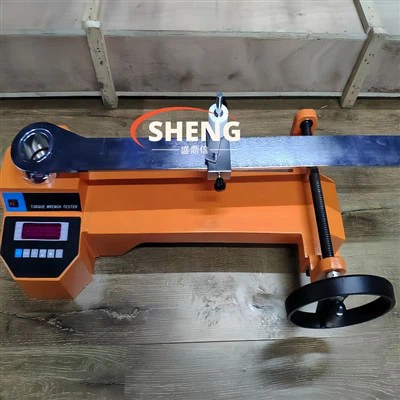 Portable Torque Meter Machine1. Single-chip microprocessor digital technology. 2. LED high-brightness display. 3. Clockwise/counterclockwise, positive and negative sign display. 4. Maximum alarm value function can be set.Add to Inquiry
 -
Double Sensor Digital Torque Wrench Tester1. Turn On The Power Switch;. 2. Press The UNIT Key To Select The Required Measurement Unit;. 3. Press The MODE Key To Set The Measurement Mode To TRACK;. 4. Press The RESET Key To Reset TheAdd to Inquiry
-
Manual Electronic Torque TesterModel: SDX-2CT. Torque range[N.m]: 0.2-2. Weight[Kg]: 25.Add to Inquiry
-
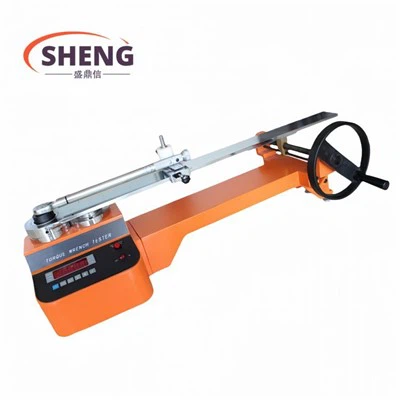 Digital Torque Wrench Tester1. Microprocessor digital technology;. 2. LED display;. 3. Humanized design, adjustable display viewing angle;. 4. Clockwise/counterclockwise (torque direction) display;.Add to Inquiry
 -
 Proto Torque Wrench Testera) Proto torque wrench tester has broad application prospects in the fields of manufacturing and metrology testing.. b) It can help companies ensure product quality and consistency, reduce productionAdd to Inquiry


The wrench calibration tester is a compact digital test instrument designed to measure the torque settings on standard 'beam', 'click' and 'break-over' wrenches. It can easily be mounted on any workbench and the torque sensor features a handy square-drive for connection of common adaptors.
This is essential to ensure the continuity of your production process. It doesn't matter if you're using a small torque wrench or a bigger one, both must work within strict tolerances to provide the right force to tighten bolts or nuts as required.
A properly calibrated wrench will accurately measure torque, allowing a fastener to be tightened with the correct tension and preventing mutual connection failures. An excessive deviation can result in less reliable or vulnerable bolt connections.
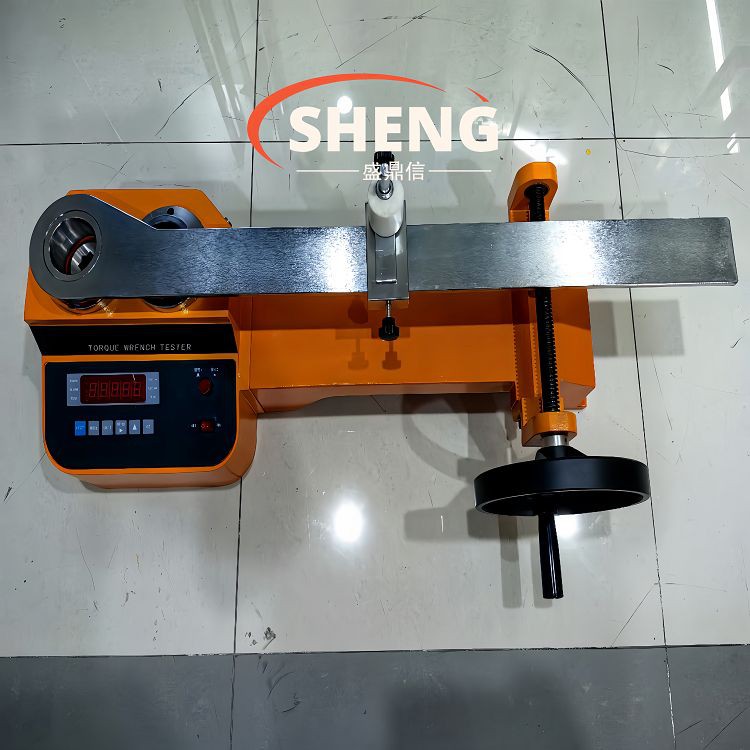
As the operator ratchets the torque wrench up and down, will measure the torque being applied.
These measurements are sent directly to a paired instrument. Depending on instrument selection, the operator can either view the data on a digital display or stream the data directly onto a PC.
If the data shows any anomalies, the torque wrench may be in need of a recalibration to meet its intended spec.
Every wrench calibration tester is prone to measurement errors. These structural uncertainties are the simply algebraic difference between the value that is indicated by the wrench calibration tester output versus the actual value of the measured variable, or known reference loads. Measurement errors can be caused by many factors:
● Zero offset (or load cell zero balance)
● Linearity (or non-linearity)
● Hysteresis
● Repeatability (or non-repeatability)
● Temperature shift span and zero
Salient Features of Wrench Calibration Tester
-
Easy to use
-
Robust workshop torque calibrators
-
Simple and lightweight design
-
Corrosion-free and long-lasting
-
Digital torque indicator

A torque tester is a quality control device to test or calibrate torque-controlled tools. This includes electronic torque wrenches, click torque wrenches, dial torque wrenches, electric screwdrivers, air screwdrivers, pulse tools, cordless screwdrivers, nutrunners, and torque screwdrivers. Advanced torque testers include the ability to measure in clockwise and counter-clockwise directions,[1] and potentially convert to engineering units (such as in·oz, in·lb, ft·lb, N·m, cN·m, kgf·cm, gf·cm, kgf·fm). They can also have different modes of operation (such as peak, 1st peak, track), and may include a certificate from a local regulator.

Torque Testing: Portable Torque Meter Machine
The association between tension and torque should be considered carefully, since it is quite hard to specify the variation of conditions of a wrench. The amount of the twisting force necessary to rotate the nut along the bolt threads is known as torque, however tension is the elongation or elasticity of a wrench that provides the holding force of a joint.
Wrenches are intended to stretch or give slightly, and the clamping load that develops during this elastic elongation is what makes the joints lock together. Torque is an incidental indication of tension, as many factors can disturb this association, such as texture of the mating surfaces, oils, rubbish, thread series, rust and material type, for instance. Almost all tables about the torque/tension relationship that have been established, including ours, are based on the following formula:
T = (K D P)/12
All of the following terms refer to the mechanical properties that aid to define the anticipated tensile strength performance of a precise wrench and can be calculated in units of force. The force is typically reported in Newtons (N) and/or pound-force (lbf). Sometimes these forces are reported in kilonewton (kN) and kilopound-force (kip). The difference is that one is used for standard measurements (inches) and the other is mostly used for metric measurements (mm).
Applying sufficient tensile force to a wrench where the outcome will not show plastic deformation is known as proof load. Proof load is considered to be around 85% – 95% of the yield strength. That is to say, the wrench must stay in its elastic range when force is applied up to its proof load. We can define Yield Strength as the tensile force that will produce permanent distortion (most commonly at 0.2% plastic strain) on a specified wrench. The maximum force a wrench must tolerate before fracture is defined as Ultimate Tensile Strength.
Choose a torque tester that suits your needs based on the required torque range, accuracy, and application environment. Different models and specifications of torque testers have distinct features, so choose one according to your specific requirements.
Connect the test piece
Connect the bolt, nut, or other connecting components to the torque tester. Ensure a secure and tight connection to avoid any looseness that might affect the accuracy of the measurement.
Set the torque value
Set the desired torque value as per the requirements. Torque testers typically have the functionality to adjust torque values, and this can be done through knobs, buttons, or a touchscreen interface.
Perform the measurement
Hold the torque tester vertically and rotate it to apply the required torque. Maintain a stable and uniform rotation speed to ensure the accuracy of the measurement.
Record the measurement results
After completing the measurement, record the measured torque value. Torque testers usually come with a display screen or data storage capability, enabling direct viewing and saving measurement results.
Calibration and maintenance
Regular torque tester calibration and maintenance are crucial steps to ensure measurement accuracy and equipment stability. Follow the calibration procedures and maintenance guidelines provided by the manufacturer.
Torque tester for all small hand tools & non-impacting power tools. Accuracy ± 0.5% of reading from 20% to 100% of full scale.
When you work with torque tools, a tool that is functioning out of tolerance or has been inaccurately calibrated can result in tool breakage as well as potentially catastrophic damage and expense to the project you're working on. Torque tools must be tested regularly to ensure they are within tolerance and recalibrated as needed, which adds to the cost of ownership over the life of the tool. The right torque measurement tool allows for interim testing, to ensure that you're not recalibrating on a calendar schedule, but only when recalibration is actually needed. This results in less downtime and reduced cost of ownership for your torque tools.
Use our torque wrench testers for click, dial, hydraulic, impact, and manual wrenches. Our range of torque calibrators and testers also check manual and power screwdrivers, digital power tools, power drivers, and any other torque tool. Our testers are available in a wide range of capacities, from 10 oz-in to 25,000 lb-ft, and in multiple measuring units.
How Often Should a Torque Tester Be Calibrated
One way or another, as you use your torque tools, they will fall out of calibration. That doesn't mean there's anything wrong with your tools or even that it's a bad thing that they go out of calibration from time to time. It's a natural part of life, a force of nature. However, the negative outcome is if you unknowingly use the tools to create defective or faulty products. At that point, you may be liable for product failure in the field and will have to deal with the repercussions.
The best way—really, the only way—to be certain your torque tools are in alignment when you use them is to test them, regularly. A tool that needs to be tested with each new fastener would be more trouble than it's worth. On the other hand, if you test your tool only once every few years, then if you find it out of calibration, you'll have difficulty figuring out how long it has been that way and how many potentially defective products it has created in the meantime.
As a general rule of thumb, it's wise to test the calibration of your torque tools every six months or twelve months. That's rare enough that it doesn't impede productivity and often enough that it doesn't create obscene liabilities. The organization that owns the tool must determine a suitable calibration frequency that meets its needs based on many factors, such as equipment performance history, application, degree of usage, and management objectives.
Naturally, tools that show visible signs of wear, such as old grease, worn parts, or loose screws, should be pulled from service and inspected as well. Tools that have been found out of calibration should be flagged and retested at half the normal interval. While these general rules are useful as guidelines, your operation's specific calibration intervals will depend on the precision you need, the exact tools you're using, the fasteners you're working with, the criticality of your application, and potentially the legal requirements which govern your industry.
Shandong Shengdingxin Precision Technology Co., Ltd. Isa professional fastening tool manufacturer in China with over 20 years experiences in this field. We have evolved from a small startup enterprise into a leader in China's fastening tool industry. With profound technical expertise, rigorous quality control, and professional service, we have earned widespread recognition in the market and customers' trust.
Our factory is located in the Jinan city, Shandong Province, occupying a vast area and equipped with modern production workshops and advanced manufacturing equipment. We have a strict production management system within the factory to ensure that every product meets the highest quality standards. Additionally, we have a team of highly skilled and experienced production team who could promise our quality and provide professional tech support.
Our factory has different product lines, such as electric& battery rebar connecting wrenches, right-angle torque wrenches, electric torque& shear wrenches, manual torque & shear wrenches, torque multipliers, and torque wrench calibrators. These products could meet the needs of different industries and customers.


FAQ
We're well-known as one of the leading measuring equipment calibration manufacturers and suppliers in China. Welcome to buy high quality measuring equipment calibration made in China here from our factory. For price consultation, contact us.
