

Hand Wrench
Why Choose Us
Wide Application
Our products are widely used in a variety of industries, including steel structure installation, equipment installation, power construction, metallurgical construction, bridge construction, railway construction, industrial plants, high-rise civil engineering, tower structures, and automotive assembly, demonstrating excellent adaptability and practicality.
Sales Market
Our products have been exported to countries and regions including India, the United States, Brazil, Pakistan, Nigeria, Bangladesh, Russia, Mexico, Japan, the Philippines, Ethiopia, Egypt, Vietnam, Germany, France, and Italy, covering a wide market and demonstrating strong international competitiveness.
Advanced Equipment
We have advanced production equipment, including high-precision CNC machine tools, automated production lines, and rigorous quality control equipment. This production equipment ensures that our products high precision, stability, and excellent durability.
Rich Experience
Our products have passed EU CE certification and multiple industry certifications, ensuring that the quality and performance of our products reach international advanced levels.
What Is Hand Wrench
Hand wrench or spanner is a tool used to provide grip and mechanical advantage in applying torque to turn objects—usually rotary fasteners, such as nuts and bolts—or keep them from turning.
-
 Hand Preset Torque WrenchConstruction Industry: Used for fastening in steel structure buildings to enhance stability and durability. For example, tightening bolts in building structures to ensure safety and stability..Add to Inquiry
 -
 Manual Digital Wrench TorquePanel-type software adjustment and two-way linear correction.. Power-on self-test and automatic zeroing.. Automatic shutdown after two minutes without signal.. Torque direction and undervoltageAdd to Inquiry
 -
 Flat Type Portable Torque MultipliersFlat Type Portable Torque Multipliers are suitable for loading and unloading nuts and bolts in small spaces but with large torque values. The operator only needs to apply a small torque to obtain aAdd to Inquiry
 -
 Handheld Rebar BenderThe handheld rebar bender, also known as a portable rebar bender or rebar bending machine, is a compact and lightweight bending tool. Powered by an advanced hydraulic system, it offers strong bendingAdd to Inquiry
 -
 Digital Torque WrenchA digital torque wrench is a high-precision torque wrench designed to accurately measure the torque applied to bolts and nuts. This advanced tool is compact and easy to use, making it ideal for bothAdd to Inquiry
 -
 Dial Torque WrenchDial torque wrenches are used to test and monitor the amount of torque necessary for fastening. This kind of wrench is ideal for torque auditing and measurement applications because it has memoryAdd to Inquiry
 -
 Preset Type Manual Torque Wrench(1)Preset torque value: The user can pre-set a specific torque value according to the requirements of the fastener.. (2)Precision control: The torque wrench can accurately control the applied torqueAdd to Inquiry
 -
 Preset Torque Wrench SetModel:SDX-100HP-017. Torque range [N.m]:200-1000. Fine Scale [N.m]:5. Driver [in]: 1.Add to Inquiry
 -
 Preset T Handle Torque WrenchPreset torque value: Users can preset a specific torque value on the wrench as needed. When the wrench reaches this value, it will make a click sound to prompt the user that the preset torque hasAdd to Inquiry
 -
 Preset Click-Type Torque WrenchPowerful and Reliable: Designed to provide the force required to tighten any bolt, it is more economical than other types of torque wrenches and can handle higher torque values.. Durability: WithAdd to Inquiry
 -
 Preset Slipping Torque Wrench(1)High Precision: The Preset Slipping Torque Wrench is able to provide ±6% torque control, ensuring that the bolt or nut is accurately tightened to the required torque value.. (2)PreventAdd to Inquiry
 -
 Dial Torque Wrench1. Please do not disassemble or knock at will to avoid affecting the accuracy of the product.. 2. The outer ring of the dial is a plastic part, avoid contact with high temperature to avoid damage..Add to Inquiry
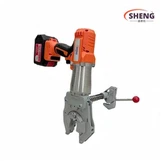


Main Types of Hand Wrenches
Hand wrenches are categorized based on the shape of their ends. The most commonly used types for home use are open-end wrenches and box wrenches. Open-end wrenches are used for common nuts and bolts. Box wrenches have ends designed to turn hex and square bolts. Combination wrenches combine the functions of both open-end and box wrenches. You're also likely to find adjustable wrenches and socket wrenches in any well-stocked toolbox.
Wrench kits are a convenient way to get an array of organized, commonly used wrench sizes from smallest to largest.


● Open-end wrench
Open-end wrenches are a double-ended wrench with a u-shaped head at each end. They are used for nuts and bolts that are hard to reach. The design allows the user to approach the fastener from two different directions. One head is slightly smaller than the other, allowing you to work on bolts of slightly differing sizes with one tool. These wrenches are sold in both standard wrench sizes and metric.
● Box wrench
Box wrenches have closed loops at each end. They are designed to accommodate both hex bolts and square bolts. Box wrenches are usually sold in sets. The better models may feature a slightly offset design. Offset wrenches allow the heads to get a better grip on recessed nuts. Because of their closed-end design, box-ended wrenches are better able to grip fasteners than open-ended wrenches without slipping or stripping the fittings.
● Combination wrench
Combination wrenches combine the benefits of box wrenches and open-end wrenches. One side is a closed loop for hexagonal or square nuts. The other end is an open u-shape. Used most often for difficult nuts, a combination wrench's closed end loosens the nut so the open end can be used to quickly unscrew it.
● Adjustable wrench
The adjustable wrench is one of the most common types of wrenches for household use. Also called a crescent wrench, it has a single open end with a crescent-shaped jaw that opens or closes with the turn of a spiral screw in the head. Because the wrench is adjustable, it can take the place of a set of open-end wrenches, making it a space-saving choice.
Features of Hand Wrench
Reversible 45-tooth round ratcheting head
Accuracy within 4% of specified torque target
Clockwise direction marking on shaft simplifies calibration
Slide-back adjustment collar lets you set the target torque quickly and easily
SAE and metric scales on the hand grip and shaft are large and easy to read
Audible signal alerts you when you reach the target torque
Bright, full polish chrome finish easily wipes clean and resists corrosion
Non-slip hand grip is comfortable and adjusts quickly
Hand wrenches are common place across a variety of industrial processes, commercial garages and even homes wherever there is a precision assembly process utilising threaded fasteners. Considering their widespread use however, there remains a number of things that people get wrong or simply don't know.
Storing your hand wrench
When a hand wrench is in regular use it does not need to be wound back. However, when storing a hand wrench for an extended period of time, users should always wind it down to the minimum scale setting and never to zero.
A fully loaded hand wrench, left in storage for a long period, can cause a set in the spring, causing it to weaken over time. On the other end of the scale, by completely off-loading the spring, other components within the wrench may move fractionally relative to each other. When you reapply spring compression the orientation of these components can change, therefore affecting accuracy. It is better to leave a bit of compression in the spring while in storage.
For accurate results, one click is enough
Users often allow hand wrenches to click multiple times, without being aware of the additional torque being applied to the bolts. Operate your hand wrench in a smooth and steady manner and remember that one click is enough.
Using your wrench on an anticlockwise thread
Many hand wrenches will only indicate in the clockwise direction. Therefore, it is necessary for users to always check the wrench's specification before using it on an anti-clockwise thread to ensure the tool is suitable and, prevent a loss of torque control. Examples of left-hand threads include the left-hand wheel nuts of certain vehicles and the left pedal of bicycles.
Converting between torque units
Converting torque units can be tricky but is a very precise process.
Adjusting your hand wrench
Equipment manufacturers will always provide the required torque for any given piece of equipment and so when adjusting your hand wrench, it is important to ensure that these levels are met. Remember to always adjust the wrench up the scale to the required torque figure to ensure accurate setting.
Using marked loading points for accurate results
Most hand wrenches are length dependent and feature a marked loading point on the handle but, many people don't use it. For accurate results, most hand wrenches have to be operated with your hand centred over the marked load point. It is also essential that this load point is observed when it comes to calibrating the hand wrench.
Using hand wrenches for undoing
So long as users operate with caution and do not exceed the maximum torque, most hand wrenches can be used for undoing. However, if the bolt will not free within the maximum torque of the wrench, another tool should be used instead. By exceeding the maximum torque limit during a bolt loosening you can affect the wrench accuracy, causing problems for future use. If in any doubt, use another tool for loosening bolts.
Adding extensions to the hand wrench handle
Users should never put a pipe or any other kind of extension onto a hand wrench handle as doing so can seriously damage the tool and make it inaccurate, never mind the potential safety hazard.
Locking it in It can be all too easy to accidentally adjust the settings of a wrench during use so, if your hand wrench is fitted with an adjustment lock, you should always apply it before operating the wrench in order to avoid any unintended changes.
Applying 'crows foot' type fittings to a hand wrench
'Crows foot' type fittings can be applied to a hand wrench square drive but they will alter the torque. It is therefore important that a suitable offset is applied to the set torque.
Keeping this advice in mind will see users getting more from their tool, with the wrenches becoming more accurate and lasting longer. The tips are simple, but the implementation of these basic rules can often be forgotten and that's when mistakes can happen.
What Are General Safety Tips When Using Hand Wrenches
Use the correct hand wrench for the job - pipe hand wrenches for pipes plumbing fittings, and general use hand wrenches for nuts and bolts.
Discard any damaged hand wrenches (e.G., open-ended hand wrenches with spread jaws or boxes hand wrenched with broken or damaged points).
Select the correct jaw size to avoid slippage.
Wear safety glasses or a face shield (with safety glasses or goggles) where there is a hazard of flying particles or falling debris.
Position your body in a way that will prevent you from losing balance and hurting yourself if the hand wrench slips or something (e.G., a bolt) suddenly breaks.
Use a box or socket hand wrench with a straight handle, rather than an offset handle, when possible.
Ensure that the jaw of an open-ended hand wrench is in full contact (fully seated, "flat", not tilted) with the nut or bolt before applying pressure.
When turning with an adjustable hand wrench, the direction of the turn should be against (towards) the permanent jaw.
Ensure that the teeth of a pipe hand wrench are sharp and free of oil and debris and that the pipe or fitting is clean to prevent unexpected slippage and possible injuries.
Apply a small amount of pressure to a ratchet hand wrench initially to ensure that the ratchet wheel (or gear) is engaged with the pawl (a catch fitting in the gear) for the direction you are applying pressure.
Support the head of the ratchet hand wrench when socket extensions are used.
Pull-on a hand wrench using a slow, steady pull; do not use fast, jerky movements.
Stand aside when work is done with hand wrenches overhead.
Make sure adjustable hand wrenches do not "slide" open during use.
Keep tools well maintained (cleaned and oiled).
Clean and place tools and hand wrenches in a toolbox, rack, or tool belt after use.

Hand wrench is a common hand tool used to tighten or loosen nuts and bolts. Every hand wrench has two parts:
The head, and the handle
- The head of the hand wrench is used to grip nuts or bolts. The handle of the hand wrench is where you will hold the hand wrench when tightening or loosening fasteners.
- All hand wrenches will tightly grip the head of a fastener. Once the head of the hand wrench grips the fastener, you can rotate the hand wrench to tighten or loosen the nut.
- Hand wrenches have long handles. The long handle gives you more leverage than other tools. More leverage makes it easier to tighten or loosen a fastener.
- You will use your dominant hand to hold the hand wrench. The handle of the hand wrench will run across your palm and in between your thumb and pointer finger. Your fingers should close around the handle.
- Recall that a longer handle gives you more leverage. Hold the hand wrench near the end of the handle for the greatest amount of leverage.
Shandong Shengdingxin Precision Technology Co., Ltd. Isa professional fastening tool manufacturer in China with over 20 years experiences in this field. We have evolved from a small startup enterprise into a leader in China's fastening tool industry. With profound technical expertise, rigorous quality control, and professional service, we have earned widespread recognition in the market and customers' trust.
Our factory is located in the Jinan city, Shandong Province, occupying a vast area and equipped with modern production workshops and advanced manufacturing equipment. We have a strict production management system within the factory to ensure that every product meets the highest quality standards. Additionally, we have a team of highly skilled and experienced production team who could promise our quality and provide professional tech support.
Our factory has different product lines, such as electric& battery rebar connecting wrenches, right-angle torque wrenches, electric torque& shear wrenches, manual torque & shear wrenches, torque multipliers, and torque wrench calibrators. These products could meet the needs of different industries and customers.


FAQ
We're well-known as one of the leading hand wrench manufacturers and suppliers in China. Welcome to buy high quality hand wrench made in China here from our factory. For price consultation, contact us.
